Storm damage / Assessment
After the weather, begin with evidence.
A calm, documented assessment helps distinguish urgent protection needs from conditions that require further review.
Request an assessment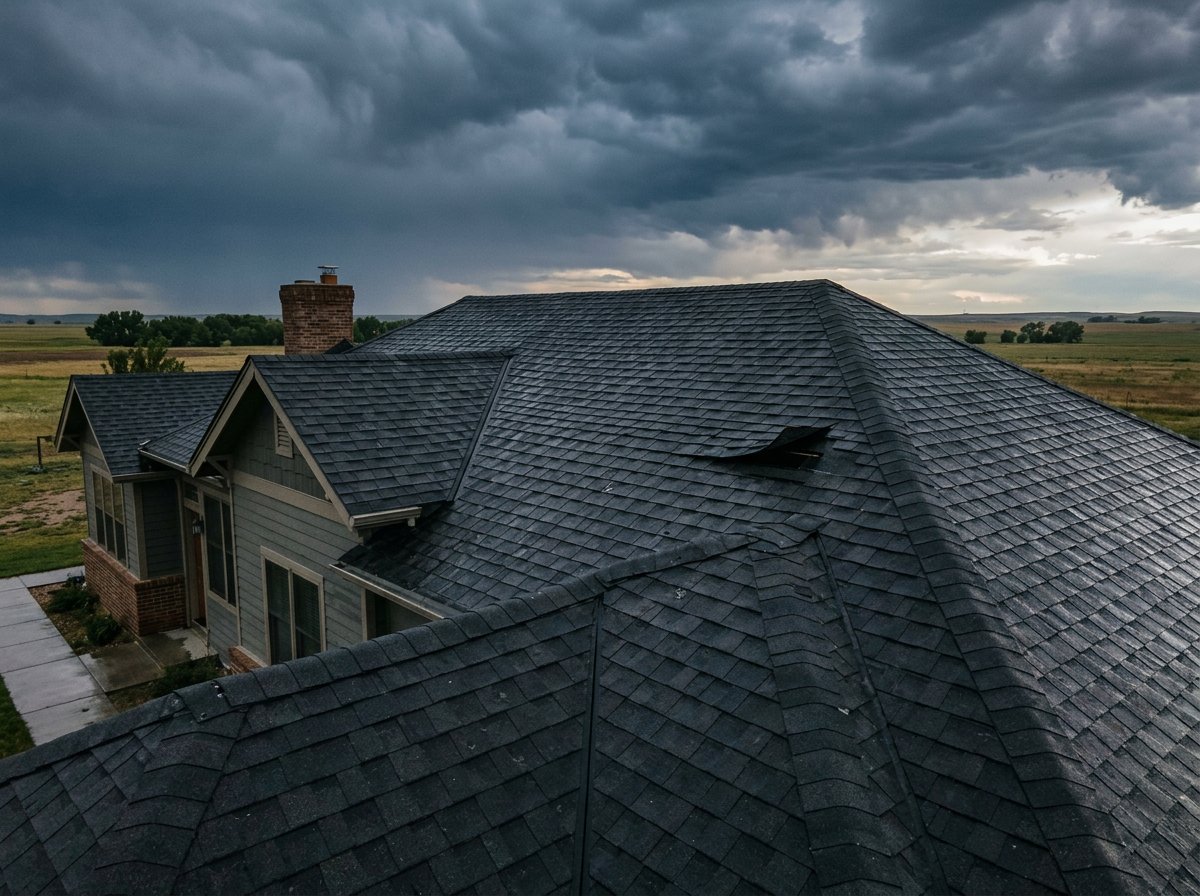
Safety first. Documentation second. Scope follows.
Do not climb onto a wet, steep, unstable, or visibly damaged roof. Observe from a safe location and address active hazards through qualified emergency services where needed.
This fictional site does not offer insurance advice, promise claim outcomes, or represent relationships with insurers. Coverage questions belong with the policyholder’s insurer or licensed adviser.
Assessment sequence
A deliberate response to uncertain conditions.
Observe safely
Record the time of the event and visible conditions from grade. Avoid roof access and loose debris.
Limit further exposure
When conditions allow, qualified personnel can identify practical temporary protection needs.
Inspect methodically
Review roofing, edges, penetrations, gutters, siding, trim, and accessible interior indicators.
Document conditions
Organize photographs and notes by location, material, observed condition, and priority.
Define next steps
Separate maintenance, targeted repair, monitoring, and replacement considerations.
After a storm
What to know.
Can damage be confirmed from the ground?
Some conditions are visible from grade, but many require closer, safe access and context. A ground observation should not be treated as a complete diagnosis.
Should I make temporary repairs myself?
Avoid roof access and any work near electrical hazards, unstable materials, or severe weather. Appropriate temporary protection depends on the specific condition and should not create additional risk.
Will an assessment determine insurance coverage?
No. A contractor can document observed building conditions and discuss construction scope. Only the policy and insurer determine coverage; no outcome should be assumed.
Document before deciding